
Compartmentation Failure: Houses & Bungalows Most Affected
Did you know that houses and bungalows are 1.6x more likely to have fires than flats? Read on to learn about fires & compartmentation in these buildings.

Every year, Fire and Rescue services around the country have to attend a huge number of incidents — ranging from false alarms to tragic deaths. We’ve analysed the data they’ve gathered to discover some surprising statistics relating to the spread of fires in homes in England.
Understanding how fires spread is crucial to helping stop the deadly threat of fires in the first place, as well as avoiding the tragic results and property damage of unchecked blazes.
Key findings
- Houses & bungalows 1.6x more likely to have fires compared to flats.
- One of the largest causes of fire spread within houses and bungalows was that there was no compartmentation fitted in the first place.
- The most common cause of compartmentation failure in flats/apartments was by fire spreading through gaps or voids in construction.
- The second most common cause in flats was fire doors left open or incorrectly installed.
Let’s look at these key statistics in some more detail below. But first, we want to make clear what is meant by ‘compartmentation’ and ‘compartmentation failure’.
What is compartmentation?
Fires need a constant supply of fuel and air in order to continue. There’s plenty of fuel in an average home in the form of soft furnishings, clothes, decorations, and more — and there’s usually plenty of air flow, too.
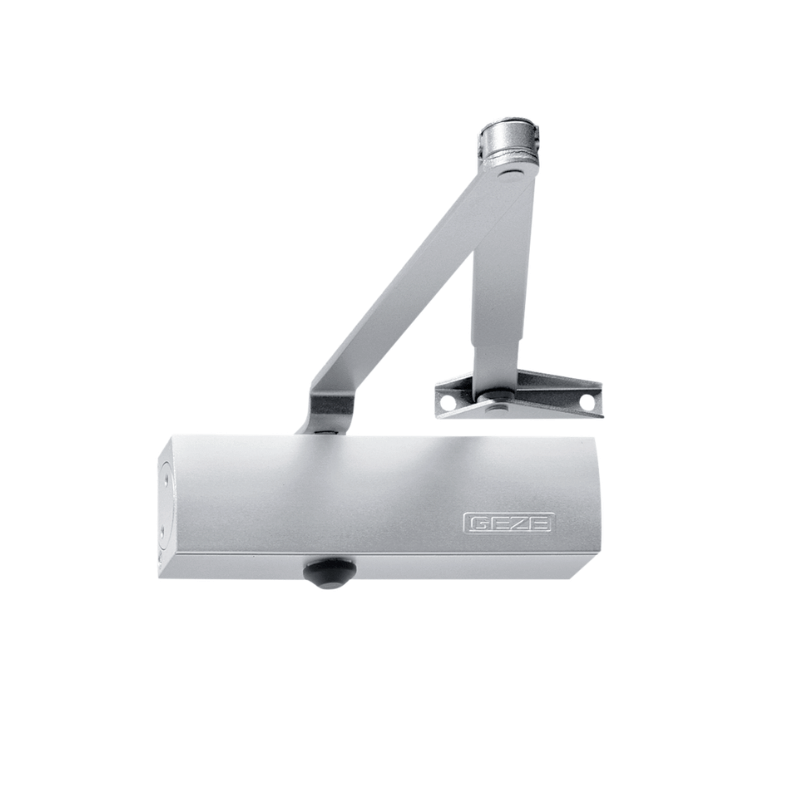
Compartmentation is intended to check the spread of fires by having either active or passive fire protection elements installed within a building that physically block a fire from moving into another room. Things like fire doors were traditionally “passive” insofar as they required occupants to keep them closed, but are now often installed as “active” insofar as they’re intended to automatically close in the event of a fire alarm being triggered.
It should be noted, however, that there are lots of passive forms of compartmentation that are extremely effective when used as parts of whole systems. Other forms of passive compartmentation include fire walls designed to separate dwelling spaces.
Compartmentation failure, then, is when these don’t work as intended (usually through user error or when features are not maintained properly and fall into a state of disrepair).
Now, onto the findings.
Houses & bungalows 1.6x more likely to have fires compared to flats

In the year ending September 2023, there were 14,442 dwelling fires in houses & bungalows that fire and rescue services attended in England compared to just 9000 dwelling fires in flats.
Houses & bungalows were therefore considerably more likely to have a fire, but flats had a much higher rate of fires spreading.
No compartmentation caused significantly more fire spread
While a lack of compartmentation can be expected to lead to more widespread fire damage within a home, it was by far the leading cause of fire spread with 6.6% of all house & bungalow fires spreading due to the lack of any compartmentation devices at all.

Flats had most fires spread through voids in construction
3.5% of all fires in flats spread due to gaps or voids in their construction. Primarily, this is likely due to the rise of larger single-family homes being poorly converted into separate rental units without adequate partitioning.
People leaving fire doors open was the 2nd most common cause of fire spread
This should prick the ears of many landlords, but the second most common cause of fire spread in the year ending September 2023 was actually fire doors being left open or, in many cases, being wedged open.
The latter is much more likely to occur with passive fire doors because occupants of the dwelling naturally like to have doors open to enable light and ventilation. So, it’s important to invest in active fire door systems so that occupants don’t ever need to prop open their doors.
Interestingly, fire doors having been installed incorrectly was also a significant contributing factor.
Why is compartmentation important?
Proper compartmentation is crucial because, in 2023-24, more than 18% of house fires affected a greater area than the fire’s starting point.
- >18% of house fires affected more than the room they started in
- >10% of house fires affected more than one floor of a dwelling
- >2% of house fires affected the whole building
These fires caused hugely costly property damage (which sometimes can’t be recouped through insurance in cases of negligent installation or use) and tragic loss of life.
Fires are becoming more dangerous
While the actual number of fires is slightly down year on year, the number of people needing hospital treatment due to dwelling fires has risen year-or-year between 2022-2023. And this is true almost across the board for nearly all types of dwellings other than purpose-built high rises.
Compartmentation failure (or complete lack of compartmentation) accounted for 15.7% of all of those fires that needed the attention of Fire and Rescue services in the year ending September 2023. Which also means that, where compartmentation was appropriately sized and correctly installed, it helped entirely check or stop the spread of fires in more than 83% of cases!
For more expert fire safety insights, head to our Advice Centre.
FireSealsDirect is a fire safety business with family beginnings and 50 years of fire safety experience, selling a vast portfolio of fire door hardware and passive fire protection products from well-known and trusted brands to the trade.
Related Articles
How Long Does A Fire Door Last?
Understanding how long fire doors last in these two areas—durability and protection—is...
Read more

Introducing the new FireSealsDirect website: Designed with the Trade in Mind
Explore the features of our new website, created with an intuitive interface...
Read more

Top Summer Fire Culprits: BBQs & Cooking Appliances
In the warmer months, dwelling fires reach a natural peak. Discover the...
Read more