



Back
Fire Door Ratings Explained: What do FD30, FD60, FD90 & FD120 Mean?
Learn more about timber fire door ratings, the testing standards they must meet & how to choose the right fire door rating for various building types and purposes.

Written by Rebecca
29th October 2024
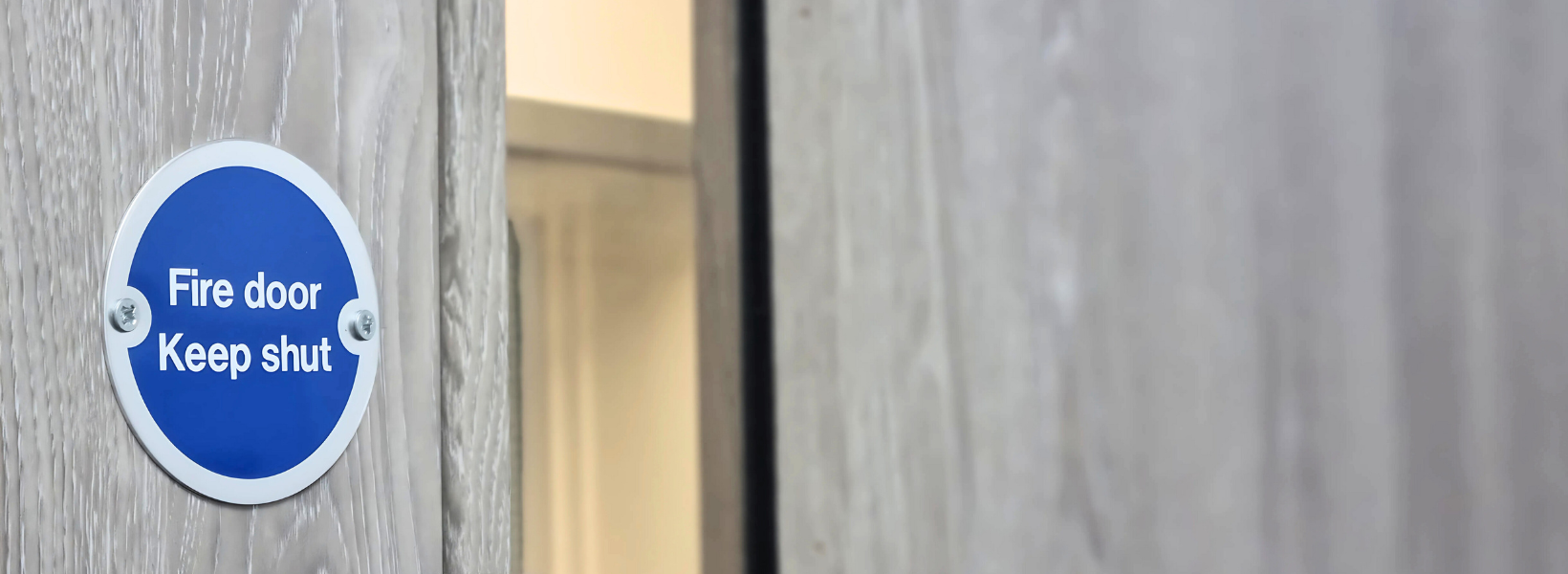
Fire doors undergo rigorous testing to determine the fire resistance rating, which indicates how long a door can hold back flames.
Understanding these ratings is essential for professionals in building design, construction and management as the level of protection needed may vary depending on the building type, layout and occupancy.
In this article, we will explore the different timber fire door ratings and what they mean, testing standards they must meet, as well as guidance on selecting the appropriate fire door rating for various building types and purposes.
What do the fire door ratings mean?
A fire door rating indicates the duration (in minutes) that a door can resist fire, typically denoted as "FD" followed by a number representing the tested time.
FD30
This indicates that a door can resist fire for a minimum of 30 minutes. These doors are typically installed in residential properties and low-risk commercial buildings, such as small offices.
FD60
These doors provide 60 minutes of fire protection and are designed for high-risk environments such as high-rise residential buildings, schools and hospitals, where more time is required for evacuation.
FD90
FD90 doors are capable of withstanding fire for 90 minutes. Unlike FD30 and FD60 doors, they are less frequently used and are typically found in industrial environments or locations where flammable materials are stored.
FD120
These doors provide an exceptionally high level of protection for up to two hours. They are not installed in commercial or residential properties, as they are mainly used in extremely high-risk environments, such as power plants.
An ‘S’ following the number e.g. FD30S, indicates that the door is a fire and smoke door, which requires the installation of fire and smoke intumescent strips to prevent the spread of cold smoke.
How to choose the right fire door rating
Choosing a fire door for a building should be done in accordance with fire door regulations in order to adequately protect occupants and property.
Here are several factors that you must take into consideration:
Building type
Fire safety requirements vary across different types of buildings. In a small block of flats, for example, FD30 doors are required to be installed along escape routes and at flat entrances, as the limited number of residents means 30 minutes provides adequate time for safe evacuation.
In more complex buildings, such as hospitals that accommodate vulnerable individuals, a higher fire door rating such as FD60 or FD90 may be required to provide additional evacuation time and to safeguard the property and its contents for a longer period.
Building layout
A building's layout will significantly impact the rating of the doors, as it affects evacuation speed during emergencies. Factors to consider include the length of escape routes—longer corridors may require higher-rated doors. Find out more on Fire Escape Regulations in the UK.
Occupancy type
The nature of the occupants plays a role in determining the fire door rating. Buildings such as hospitals and care homes housing elderly, disabled, or otherwise vulnerable individuals may require doors with higher fire resistance ratings to allow sufficient escape time.
Testing Standards and Certification
Fire doors undergo rigorous testing to determine their fire resistance rating. The testing standards in the UK are the British Standard BS 476 and European standard EN 1634, which outline the fire resistance test procedure for doors.
During testing, a doorset is exposed to controlled fire conditions where it is monitored and assessed over time. The duration for which it withstands the fire determines its rating. Any fire door hardware that the door has been tested with will be detailed in the manufacturer’s specifications, and the door must be installed with the products listed.
It is recommended that fire doors are third-party certified by organisations such as Warringtonfire, who conduct repeat testing and annual audits. The involvement of an independent body ensures that management and manufacturing processes are established and upheld to guarantee consistency with the door or doorset that was originally tested.
Certified doors will display labels or markings indicating their rating, certification number and relevant standards.
Find out more about information on third-party passive fire product certifications and accreditations.
Maintenance and inspection of fire doors
Even the highest-rated fire doors can fail in a fire if not properly maintained. Regular inspections and upkeep are crucial to ensure compliance and functionality.
Fire door inspections should focus on the following:
- Operation
They must be equipped with a reliable self-closing mechanism to ensure that the door fully closes into its frame, overcoming any air pressure or latching systems that might otherwise prevent it from sealing properly.
- Visual Inspections
Regularly check for damage, misalignment, or gaps that could compromise the door's integrity.
- Seal integrity
Check the intumescent seals for signs of wear or damage. While they are inexpensive to replace, they are a crucial component of a fire door.
- Display a certification label
Doors must have a label or plug to indicate the rating it has achieved.
- Appropriate hardware
Hardware such as hinges and latches must be in good working order and free of damage.
- Professional inspections
The best way to determine if your fire doors need repairs or replacements is to consult a fire safety professional who can inspect and advise.
Check out our free downloadable fire door inspection checklist to assist you with your checks.
Looking for more information on fire doors? FireSealsDirect can help
We are a family business with 50 years experience in the field of fire safety, offering a wide range of passive fire protection products from trusted brands.
Our expert customer care team is on hand and ready to assist with any queries you may have about our product range. Reach out to us through our live chat feature or email us at [email protected].
You can also check out our Advice Centre, offering a host of guides and useful advice on fire safety, fire legislation and more
Related Articles

Everything You Need To Know About Internal Fire Doors
A comprehensive guide to internal fire doors. Learn about regulations, fitting, maintenance,...
Read more

Compartmentation Failure: Houses & Bungalows Most Affected
Did you know that houses and bungalows are 1.6x more likely to...
Read more
How Long Does A Fire Door Last?
Understanding how long fire doors last in these two areas—durability and protection—is...
Read more