



A Guide to Essential Fire Door Ironmongery
Discover the significance of fire door ironmongery and the importance of ensuring all hardware meets the fire rating of the door to comply with fire safety regulations.

Written by Rebecca
8th March 2024
A fire door is designed to protect lives and property by containing the spread of fire and smoke during an emergency, providing occupants with additional time to evacuate the building and helping to mitigate the destructive impact of fire.
To adhere with fire safety regulations, a fire door must be furnished with the relevant components, including fire-rated ironmongery, that are compatible with the door core.
Accurate specification, fitting and maintenance of fire door ironmongery is vital to achieve compliance and reach the expected performance in the event of a fire.
In this blog, we take a look at the different types of ironmongery for fire doors, emphasising the importance of selecting the right products and maintaining them to ensure the door will work as intended.
What ironmongery does a fire door require?
When selecting ironmongery for a fire door, you must ensure that it is compliant and has been fire tested in accordance with the fire rating of the door - this is most commonly 30 or 60 minutes for timber fire doors.
It is important to note that if the door core is Certifire approved, all ironmongery must also possess a Certifire certification, otherwise the fire door will be invalidated as a whole.
Hinges
Fire doors must be accurately installed with the correct hinges which are strong enough to support the extra weight of a fire door and its components.
These specialised hinges are crafted to endure high temperatures to prevent warping of the door during a fire. A minimum of three hinges are required which adhere to BS EN 1935 standards and must be certified and CE marked (demonstrating compliance with EU legislation) or more recently, UKCA marked for products in the UK.
Typically, fire door hinges are constructed from Grade 13 stainless steel. The higher the grade, the sturdier the steel, ensuring it can withstand extreme pressure, weight, and heat. While Grade 11 and Grade 7 hinges are available, they are often only suitable for 30-minute fire doors and carry a lower weight capacity.
To determine what grade of steel the door has been tested with, the positioning of the hinges and the specification of intumescent hinge pads, consult the door core manufacturer's datasheet where you can find all of the information you need.
Door closers
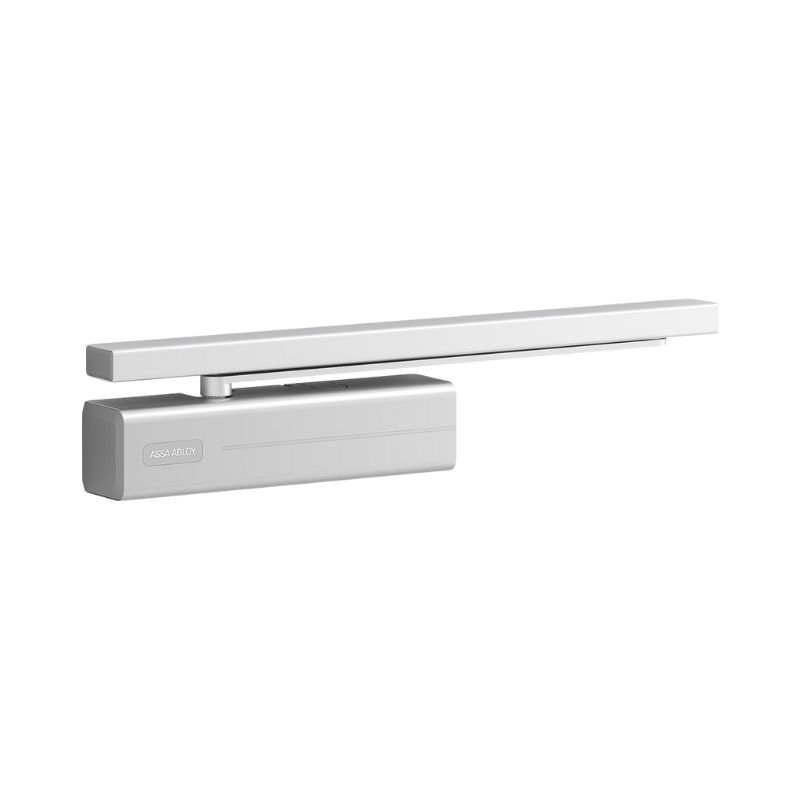
Fire doors effectively prevent the spread of fire and smoke only when they are fully closed and latched, making a door closer an essential part of a fire door system.
The door closer must be capable of closing the door from any opening angle and should be strong enough to overcome resistance from latches or sealing systems.
It is important to make sure that the door closer is suitable for the type of door it will be fitted to and the environment it is in.
Heavier doors will require a door closer with a larger power size so it’s important to check the height, width and weight of the door and door frame. When fitting a door closer to a fire door it must have a minimum power size of EN 3 to adhere to the BS EN 1154 standard.
It is important to understand and consider all of the control zones when selecting and fitting a door closer, and adjustments should be made where necessary. Find out more about the 4 door closer control zones.
There are various types of door closers available, including overhead, cam action, electromagnetic, retainer, and concealed. Find out more information about the different types of door closers, and which one is suitable for your fire door project.
Locks & latches
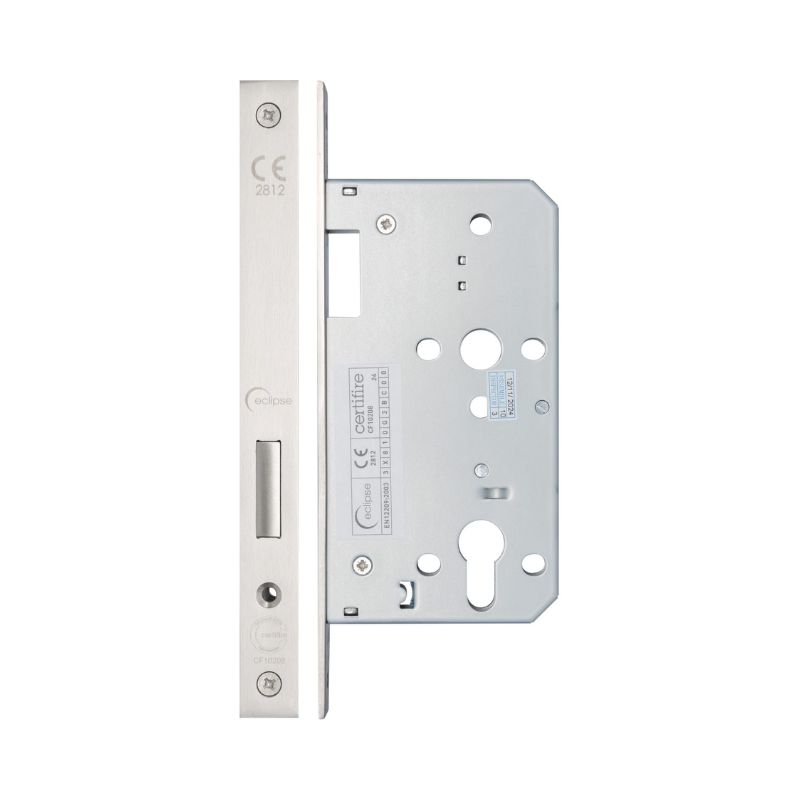
Fire-rated locks and latches play a critical role in enhancing both security and fire safety. They must be CE marked in accordance with BS EN 12209, and be fire tested to BS EN 1634.
Specifically constructed out of materials and mechanisms that can withstand the intense conditions of a fire, fire-rated locks and latches effectively secure the fire door, contributing to the containment of fire and smoke.
A range of locks and latches, such as sashlocks, deadlocks, and tubular latches, are available, however, your selection will depend on the location of the door.
For flat entrance fire doors, fire safety regulations dictate the installation of a lock with a thumb turn, allowing it to be unlocked and opened quickly from inside the property without a key. On the other hand, a fire-rated office door may only necessitate a latching system with a lever handle.
Installation with intumescent protection is important to safeguard the door core to ensure fire door integrity and rating is maintained.
Fire-rated cylinder lock barrels, escutcheons and handles are available and contribute to a reliable system.
Consult the door's data sheet with regard to permitted latch or locking systems.
Handles
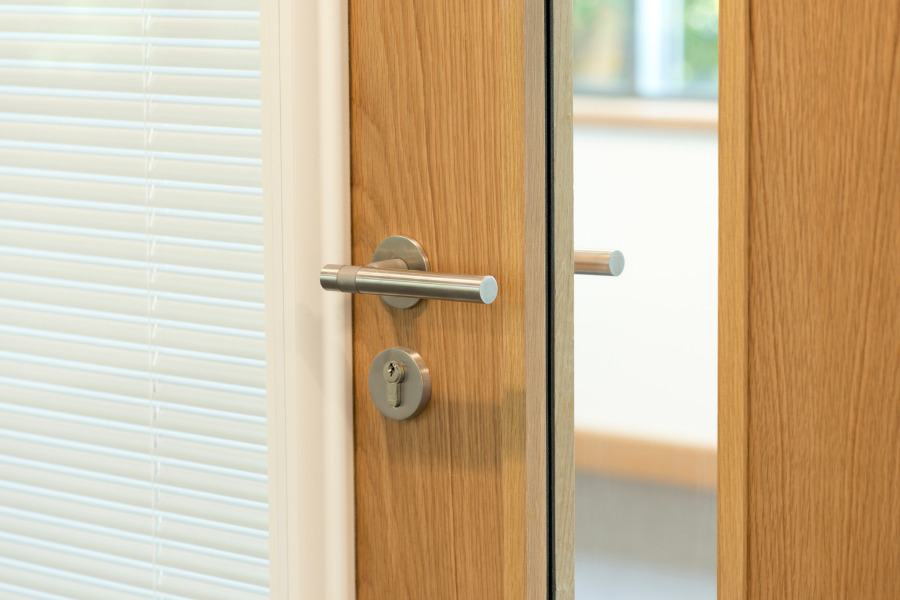
An essential component of the overall fire door system, a door handle collaborates with other ironmongery elements.
Designed to withstand high temperatures, fire-rated handles differ from regular ones that might deform or malfunction when exposed to fire.
We stock a variety of door handles in different designs, all tested for both 30 and 60-minute fire doors, suitable for applications in domestic, commercial, and industrial settings.
Refer to the datasheet provided by the door core manufacturer for comprehensive details on the required handles. This will often state that they must be crafted from certain materials such as aluminium or steel.
Fire door signs
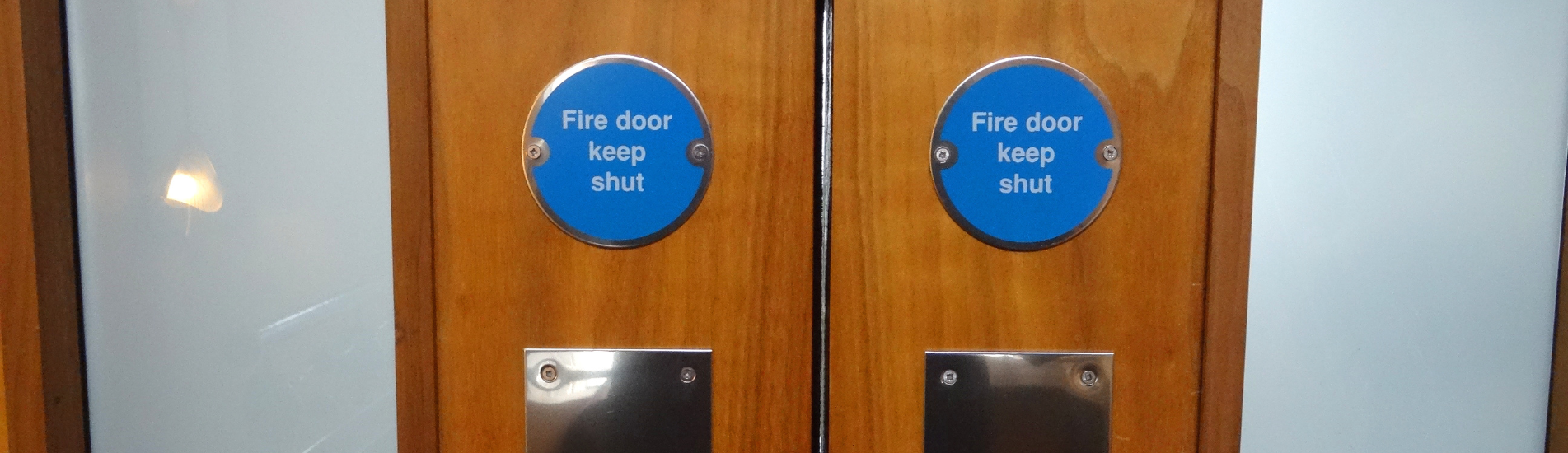
It is mandatory for all fire doors to have clear signage at eye level on both sides (unless one side has no approaching traffic) to ensure easy identification within a building.
In general, 'Fire door keep shut' signs are most commonly used. However, doors with electromagnetic door closers should have an 'Automatic fire door keep clear' sign, and riser cupboards may require a 'Fire door keep locked' sign.
All of our fire door signs are all made of aluminium, screen printed, and suitable for both 30 and 60-minute fire doors.
Fire door hardware
Depending on the fire door and where it is situated within a building, it may be necessary to install additional hardware such as:
- Panic exit devices for doors on escape routes to allow fast and safe exit from a building
- Drop down fire door seals where doors require a smaller threshold gap to prevent the passage of smoke and flames
- Intumescent letterboxes for flat entrance doors
- Kick plates and finger plates to prevent damage to doors in high traffic environments
How to maintain fire door ironmongery
The everyday use of fire doors can affect their performance over time, therefore it is important to conduct regular checks to ensure they function correctly and will work as required should a fire occur.
The Regulatory Reform (Fire Safety) Order 2005 states that the ‘responsible person’ for a building must regularly inspect and maintain fire doors and door hardware to ensure a person’s safety within a building, however the frequency of this depends on the building in question.
It became law in January 2023 for the responsible person of a multi-occupied residential building with storeys over 11 metres to undertake quarterly inspections on all fire doors in common parts, and annually check all flat entrance doors that lead to a building's common parts.
For lower risk, smaller buildings, it is recommended to complete fire door checks on an annual basis.
If, upon carrying out these checks issues are identified, urgent repairs must be carried out to avoid legal or financial penalties.
Download our fire door inspection checklist to ensure your fire doors are maintained in line with regulations.
How we can help
FireSealsDirect is one of the leading distributors in the UK for fire door components, stocking certified products from the most reliable brands in the industry such as Lorient, CCE and Pyroplex.
Should you need any help or guidance when choosing the right products for your fire door project, do not hesitate to contact our expert technical team at [email protected] or call 02920 857 959.
Related Articles
Do Fire Door Handles Need To Be Fire-Rated?
Learn whether fire door handles need to be fire-rated by reading this...
Read more

Fire Regulations For High-Rise Residential Buildings
Looking to learn more about fire safety regulations for high-rise residential buildings?...
Read more
Passive Fire Protection in Extensions
Discover the importance of implementing passive fire protection measures in extensions and...
Read more