



Where Is Panic Hardware Required?
Panic hardware helps occupants exit quickly and safely during an emergency, even in smoky conditions. Learn more about how it supports safe evacuation.

Written by Esme
1st February 2023
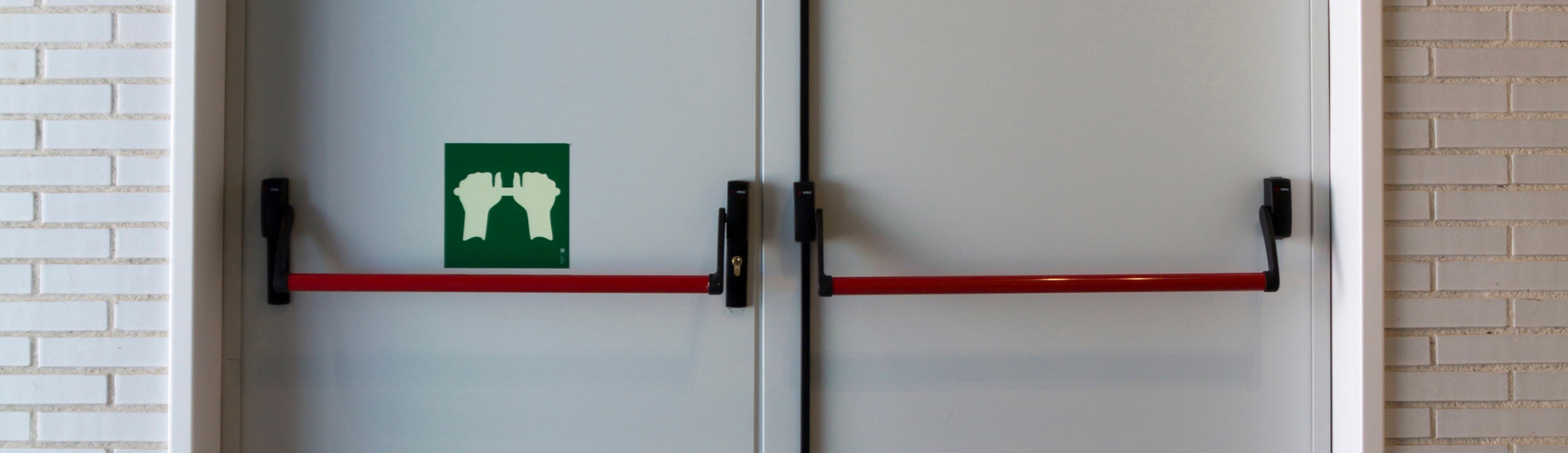
Panic hardware is designed to enable building occupants a safe and efficient exit during an emergency situation, such as a fire. They give a clear action, and are easy to use even in smoky conditions.
They are a popular device fitted to fire exit doors and fire doors on escape routes. In an emergency, panic hardware plays a key role in allowing the quick opening of a door, which can save lives.
Here we will explore the importance of panic hardware, identify where it might be necessary, and explain the different types that fall under different British Standards such as BS EN 1125 and BS EN 179.
What is panic hardware?
Panic hardware refers to a type of mechanical door hardware designed to be operated from the inside of an outward-swinging door exit, prioritising safety over security.
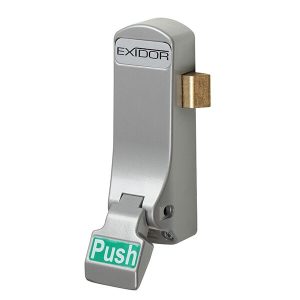
It enables the swift opening of a door without the need for a key or handle, requiring minimal effort thanks to the push-to-unlock mechanism, as featured on the Exidor 296 Panic Latch.
In the UK, panic hardware is required to adhere to a British Standards rating, either BS EN 1125 or BS EN 179, based on the specific device and the environment it is intended to be used in.
When selecting which type of panic hardware to use, installers must consider the environment and its occupants.
BS EN 1125
Panic hardware under BS EN 1125 is most commonly referred to as Panic Exit Devices.
They are designed for installation where the public can escape through a doorway with "minimum effort and without prior knowledge of operation", i.e. shops and places of entertainment.
The main purpose is to provide a safe and effective escape, rather than focussing on security.
BS EN 179
This standard covers Emergency Exit Devices that are used in buildings where occupants are familiar with the emergency exit and its hardware i.e. a small office, where the likelihood of a panic situation is reduced.
Devices operated by either a lever handle or push pad may be utilised in such cases.
Types of panic hardware
Push Bar
Push bars adhere to the BS EN 1125 standard as they are specifically designed for a swift and effective exit in public spaces.
They are suitable for installation on timber and steel doors, accommodating both single and double door applications.
Push bars feature either a latch or bolt locking mechanism, providing both safety and security.
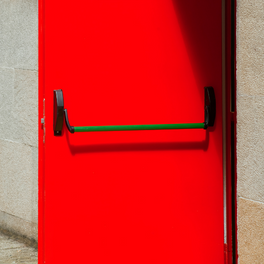
Touch bar
Touch bars also comply with BS EN 1125 and can be applied in similar situations as push bars.
However, touch bars differ in that they eliminate the gap between the bar and the door, preventing individuals from getting their arms caught or trapped behind them in an emergency situation.
Push Pad
Push pads are compliant with BS EN 179 and are an example of an emergency exit device. Their usage is limited to environments with fewer than 60 occupants who are familiar with the building layout and door hardware.
The unit is operated by pushing the pad down into the door face to retract the latch, releasing the pad returns the latch to the rest position.
Where is panic hardware required?
Panic hardware is typically required in a variety of different buildings where there are emergency exit doors leading to a safe area.
Regulations require all fire exit doors in public buildings (BS EN 1125) to have panic hardware installed. Some internal doors also require single action egress on escape routes.
If doors do not lead to an escape, panic hardware is not essential.
How We Can Help
Shop our panic hardware today. As experts in passive fire protection, the team at FireSealsDirect are also always available if you need any help or advice with your fire doors or project.
Contact our technical team on 02920 857 959 or [email protected] and they will be happy to assist you with any questions or queries.
Related Articles
Can you Modify a Regular Door to become a Fire Door?
Discover why a standard door cannot be modified to meet fire‑rated requirements...
Read more

How To Install A Fire Batt
A fire batt is a mineral fibre board, coated in an ablative...
Read more
The 4 Door Closer Control Zones
Knowing the four door closer zones is important when installing a new...
Read more