In buildings with open‑plan layouts, concealed ceilings, or roof voids, fire can spread rapidly without effective fire compartmentation.
Flexible fire barriers create fire‑resistant compartments that slow the movement of smoke and flames, helping protect occupants, maintain structural stability, and support a building’s passive fire protection strategy.
What Are Flexible Fire Barriers?
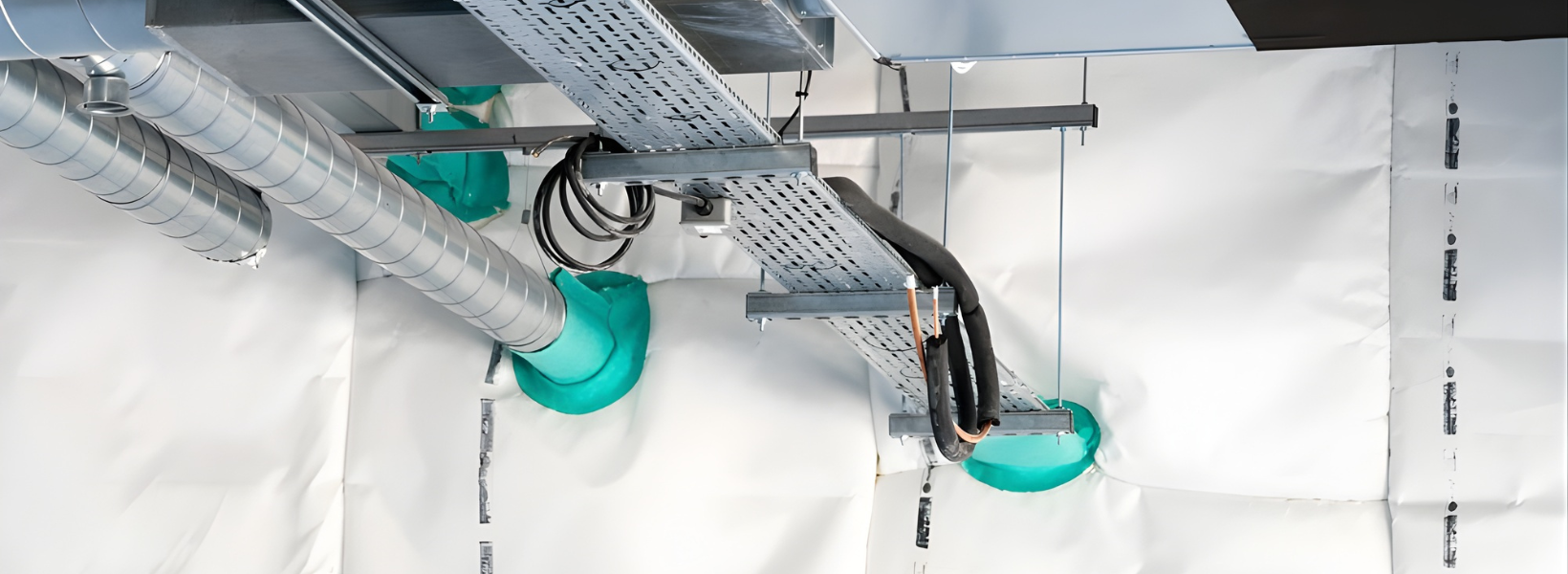
Flexible fire barriers are specialist fire‑resistant systems installed in ceilings, roof voids, and other concealed spaces to contain fire and smoke within defined areas.
Lightweight and easy to handle, they are suitable for both new construction and retrofit projects. Systems are tested for integrity and insulation to ensure they can resist flames and limit heat transfer for a specified duration.
UK building regulations, including Approved Document B, require fire compartments to be fully enclosed. Without appropriate barriers in suspended ceilings or concealed voids, a building may not meet required fire‑resistance ratings. Professional installation to the correct specification is essential for compliance and performance
Materials Used in Flexible Fire Barrier Systems
They are typically manufactured from advanced fire‑rated materials such as woven or non‑woven glass‑fibre fabrics. Some systems incorporate aluminium layers depending on their insulation rating. All materials undergo rigorous testing to meet strict standards, ensuring reliable performance during a fire.
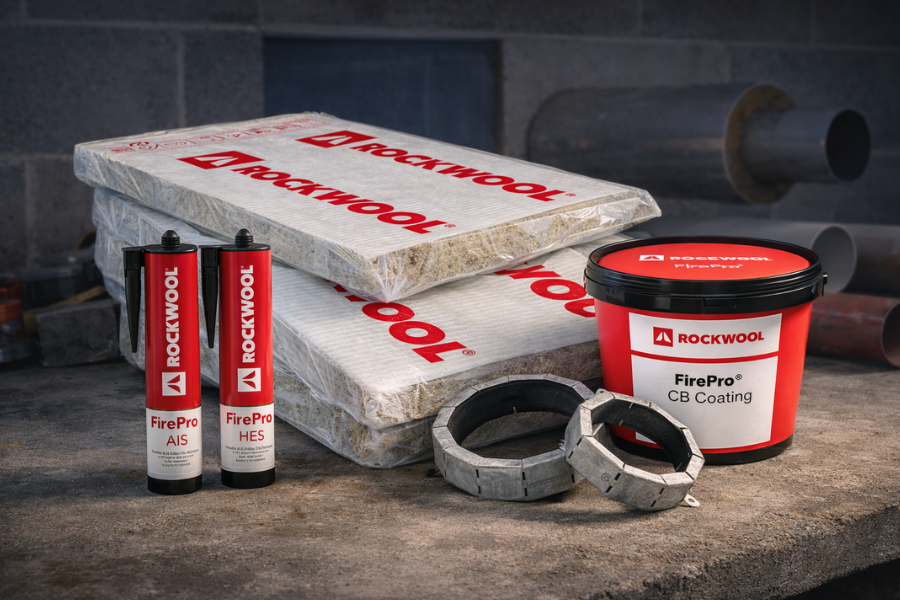
To achieve a fully tested and certified system, these barriers must be installed alongside the correct ancillary products.
Where Are Flexible Fire Barriers Installed?
Flexible fire barriers are installed in areas where fire and smoke can travel quickly through concealed or open spaces.
Common Installation Areas
- Suspended ceilings
- Roof voids and loft spaces
- Atriums and open-plan areas
- Stairwells and corridors
- Lift shafts and escalator openings
- Wall and floor junctions
Suitable Building Types
Flexible fire barriers are used across a wide range of buildings, including:
- Commercial buildings
- High-rise residential buildings
- Healthcare facilities
- Educational institutions
- Industrial sites
- Data centres
Types of Flexible Fire Barriers
Flexible fire barriers are available in vertical and horizontal configurations to suit different building layouts and requirements.
Vertical Fire Barriers
Vertical fire barriers are commonly used in roof voids, lofts, and other concealed spaces across commercial buildings, high‑rise residential developments, warehouses and industrial environments. They integrate discreetly without affecting internal aesthetics.
Horizontal Fire Barriers
Horizontal fire barriers span large openings to prevent vertical fire and smoke spread. They are often installed in atriums, stairwells and mezzanine floors in airports, shopping centres, and other multi‑level buildings.
Understanding Integrity and Insulation Ratings (E & I)
Understanding integrity and insulation ratings is essential when specifying a fire barrier.
Integrity (E) measures a barrier’s ability to prevent flames and hot gases from passing through to the non‑fire side.
Insulation (I) measures how effectively it limits temperature rise on the protected side.
For example, EI60 or 60:60 means that the barrier provides 60 minutes of both integrity and insulation. UK building regulations specify required ratings based on a building’s size, use, and fire strategy
For a more detailed explanation of the differences between integrity and insulation, visit our dedicated blog post.
How we can help
At FireSealsDirect, we supply a comprehensive range of flexible fire barrier systems from the trusted brand, FIREFLY®. These systems are designed to deliver reliable fire compartmentation in concealed spaces, helping you meet UK fire safety regulations with confidence.
Our team is on hand to help you choose the right solution for your project. If you need guidance on specifications, installation requirements, or product suitability, we’re here to support you every step of the way.
Get in touch with us at [email protected] or call 02920 859 959.