



What Door Closer Do I Need?
Selecting the right fire door closer can feel overwhelming, so we've broken down the differences between each type to help guide your decision.

Written by Esme
19th June 2022
Fire doors are designed to contain fire and smoke for long enough to limit damage to the building whilst also allowing occupants to exit safely. However, fire doors only work properly when closed.
Fire door closers work to protect against human error by automatically closing a door once it’s been opened. The door closer must be capable of closing the door from any angle of opening to be effective and should be strong enough to overcome the resistance of any latch or sealing system.
This important piece of fire door hardware is essential for reducing the risk of fire and smoke spreading, but with so many options to choose from what factors should you consider when selecting the right door closer?
Types of door closers
Automatic Overhead Door Closers
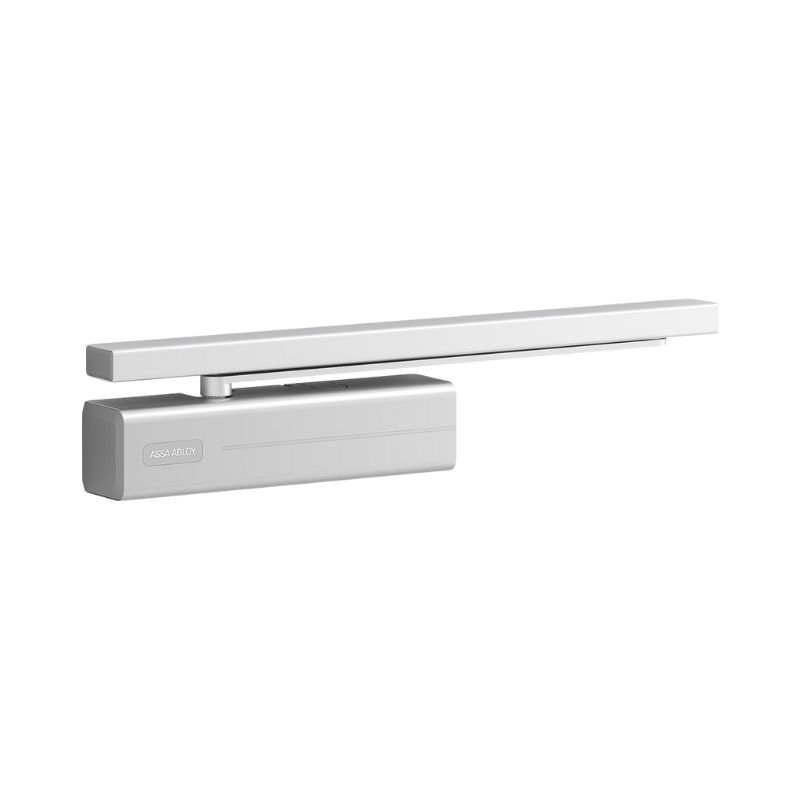
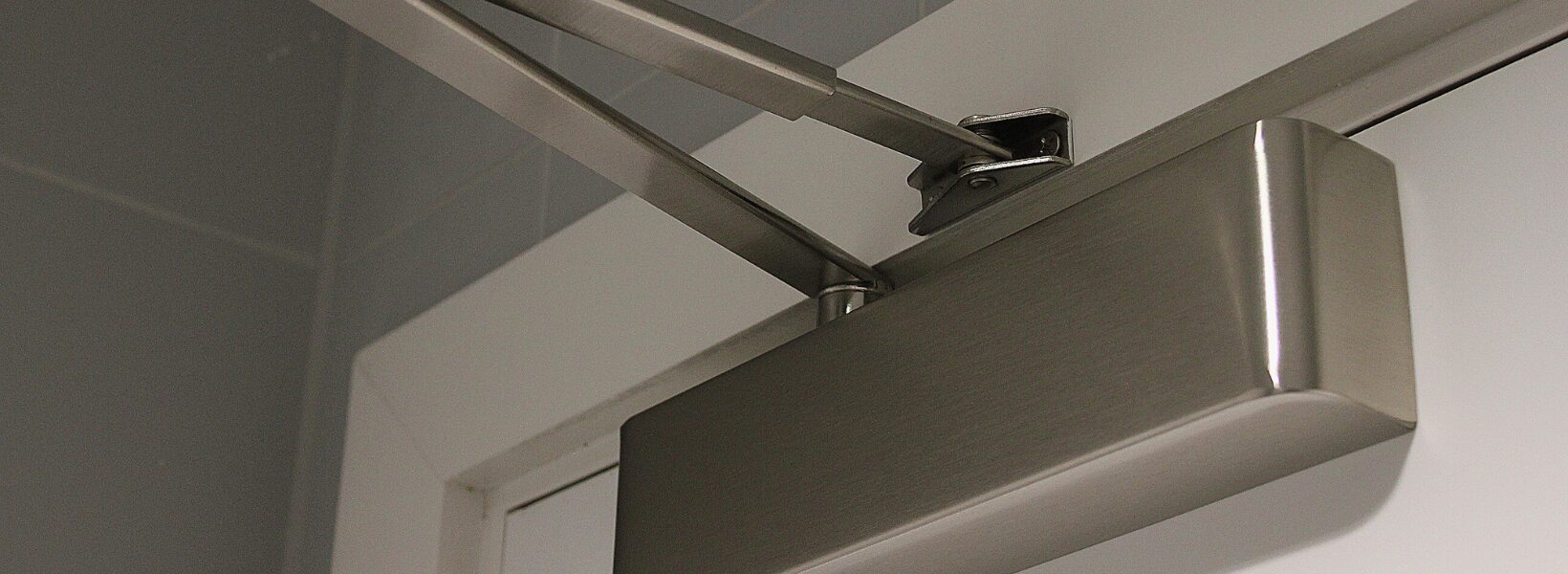
Overhead door closers come in a range of specifications and vary depending upon adjustability, power and finish. The overhead door closer consists of two parts: an upper arm that is attached to the door frame, and a lower arm that is attached to the door. The overhead door closer works by using gravity and spring tension to pull the door closed.
When selecting a fire door closer for your fire door you need to find out which door closer has enough closing strength for your specific door. To make this process easier, door closers have been given different strength categories, referred to as ‘EN power sizes.’
For low traffic areas the Briton 121CE provides a compact door closer with a fixed power size 3.
Some overhead door closers are more effective for medium/heavy duty doors. The Rutland TS5024 is a medium/heavy duty overhead door closer with variable power adjustment to EN 2-4.
Electromagnetic Door Closers
Electromagnetic fire door closers are connected directly to a building’s fire alarm system, using electromagnetic technology to hold fire doors open. When the fire alarm is activated, this technology ensures the safe closure of the door by releasing the hold and allowing the door closer to shut it automatically.
This mechanism provides convenient access in busy environments such as hospitals, schools and airports, while maintaining fire safety by containing fire and smoke when needed. Proper installation and regular maintenance are vital to ensure reliable operation during emergencies.
Retainer Fire Door Closers
Retainer fire door closers are popular in high traffic areas such as school corridors, to allow for ease of movement and accessibility throughout the day without compromising fire safety. These devices keep fire doors open under normal conditions, automatically releasing them upon the sound of a fire alarm.
They must be installed alongside an automatic fire door closer to ensure the door closes securely in the event of a fire.
How to choose a door closer
When choosing the right door closer there are many factors to consider.
These factors include:
- The size of the door frame
- The weight and size of the door itself
- Whether the door is internal or external
- If the door is inward or outward opening
- How frequently the door is going to be in use
Considerations for installing a door closer
What size will the door frame be?
When installing a fire door closer, it is important to make sure that the size of the door is compatible with the fire door closer.
To check the size of the door, measure the width of the door at the top, middle, and bottom. Next, measure the height of the door from the top of the door to the bottom of the door frame. Once you have determined the size of the door, you can then select a fire door closer that is designed for that specific size.
By taking these measurements carefully, you can ensure that your fire door closer will be properly installed and will function as intended.
Where will the door be located?
It is important to consider if the door is an internal or external door.
Some door closers are made from materials that may rust more easily or aren’t secure enough to withstand potential vandalism on external doors.
It is also worth considering if the door is an inward or outward opening door.
How frequently will the door be used?
It is important to consider the amount of traffic that will pass through the door in order to make sure the door closer meets any durability requirements.
For doors that have extremely high traffic you may consider a hold open door closer that can be kept open and has an audio trigger to close once alerted by the fire alarm.
How heavy will the door be?
Heavier doors will require a door closer with a larger power size so it’s important to check the height, width and weight of the door and door frame. When fitting a door closer to a fire door it must have a minimum power size of EN3 to conform to the EN1154 standard.
A lighter door could be at risk of becoming damaged by a door closer with too much power or force. A door closer with power adjustment will give you scope after fitting to increase the power and overcome any hidden obstacles.
How to mount a door closer
Before installing any hardware it’s important to ensure that both the door and the door frame are working properly and in good condition.
Detailed instructions on how to mount a door closer can be found here, however this may wary depending on the model and brand.
Once you have finished the installation you can check the speed and performance of the opening and closing of the door and make adjustments as necessary.
Conclusion
Fire door closers are a simple but crucial solution to reducing the risk of fire and smoke spreading. Installing the correct overhead door closer or fire door retainer will make sure that your fire doors are closed when needed, restoring the required fire barrier within the building.
When choosing between the different types of fire door closers, it is important to consider all of the factors involved. The environment in which the door closer will be used is the most important consideration, but other factors such as weight and usability should also be taken into account.
For advice on picking the right door closer, please get in touch with our expert team who will be happy to help on 02920 857 959 or [email protected].
Related Articles
A Guide To Fire Cavity Barriers
Cavity barriers are blocks of fire-resistant material designed to reduce the spread...
Read more

Fire Safety Penalties For Non-Compliance
The UK government has an array of penalties for non-compliance with fire...
Read more

How Much Can I Trim Off My Fire Doors?
Make sure you know how much can be trimmed from fire doors...
Read more